
Signature Dish: Diles Que No Me Maten
Responses by Jonás Derbez. Photography by Sara Messinger. Written by Heather Hawke.
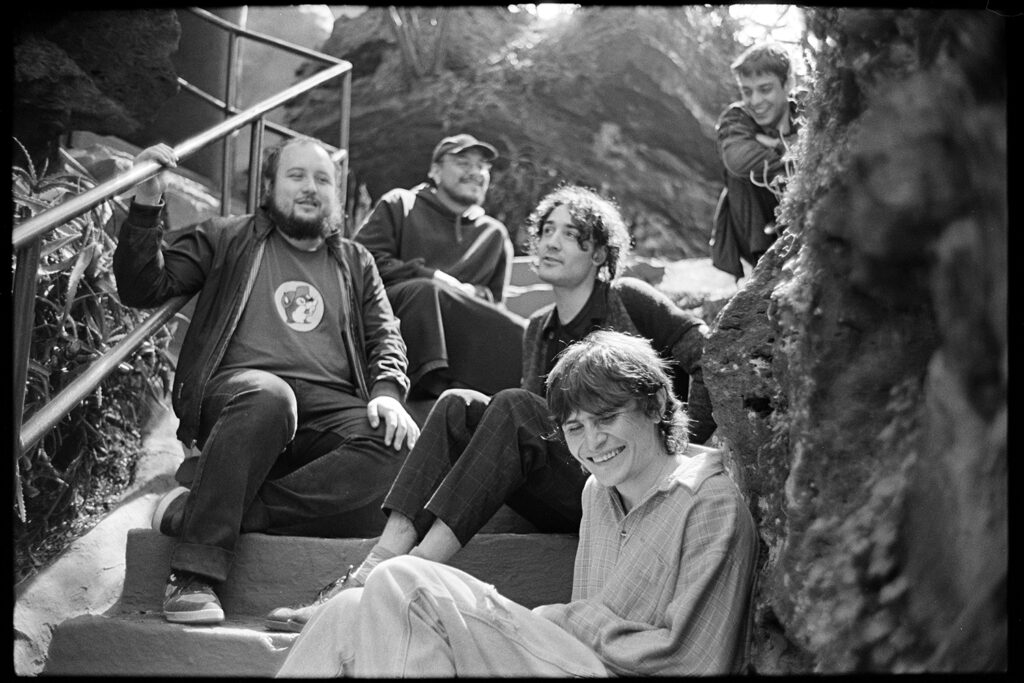
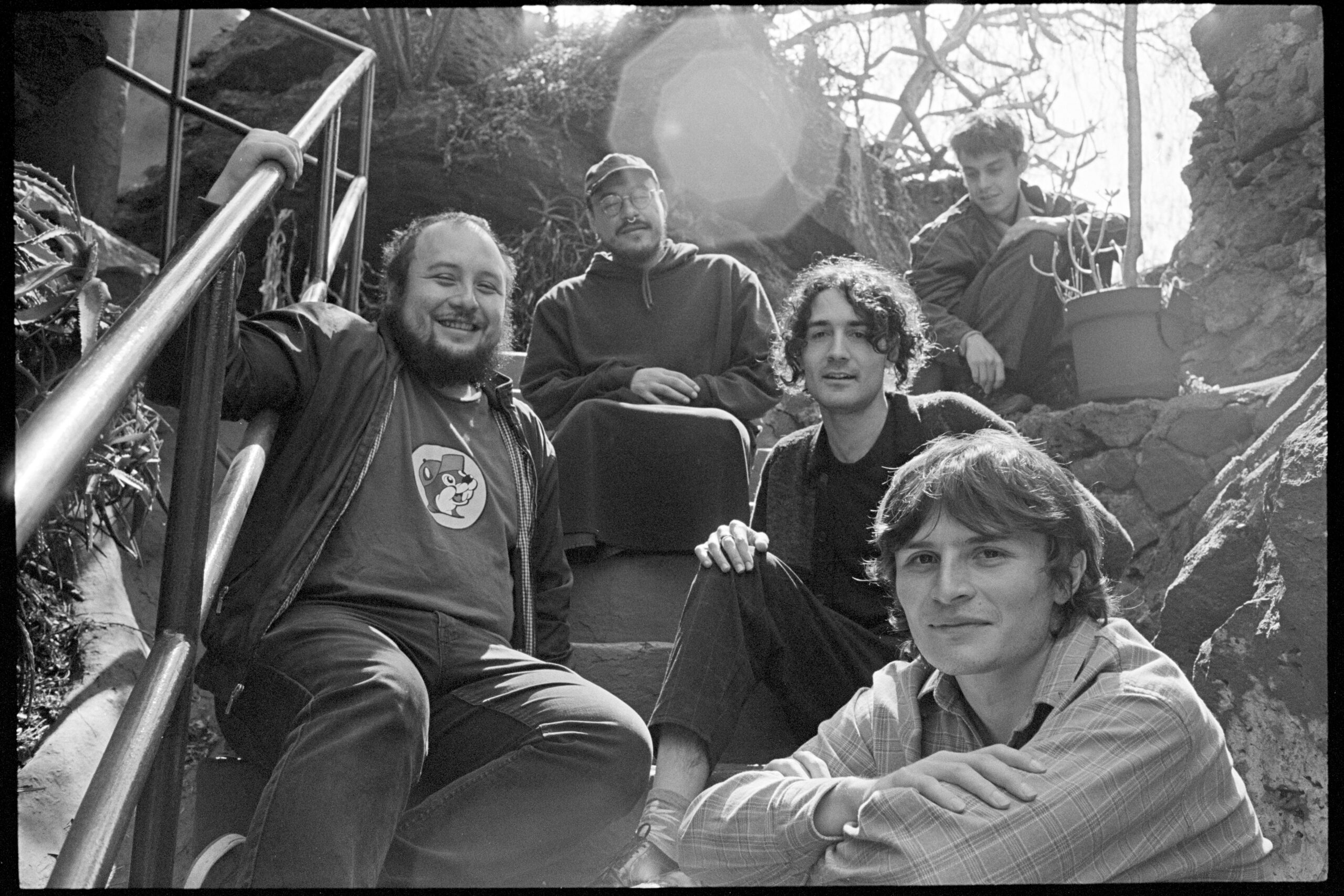
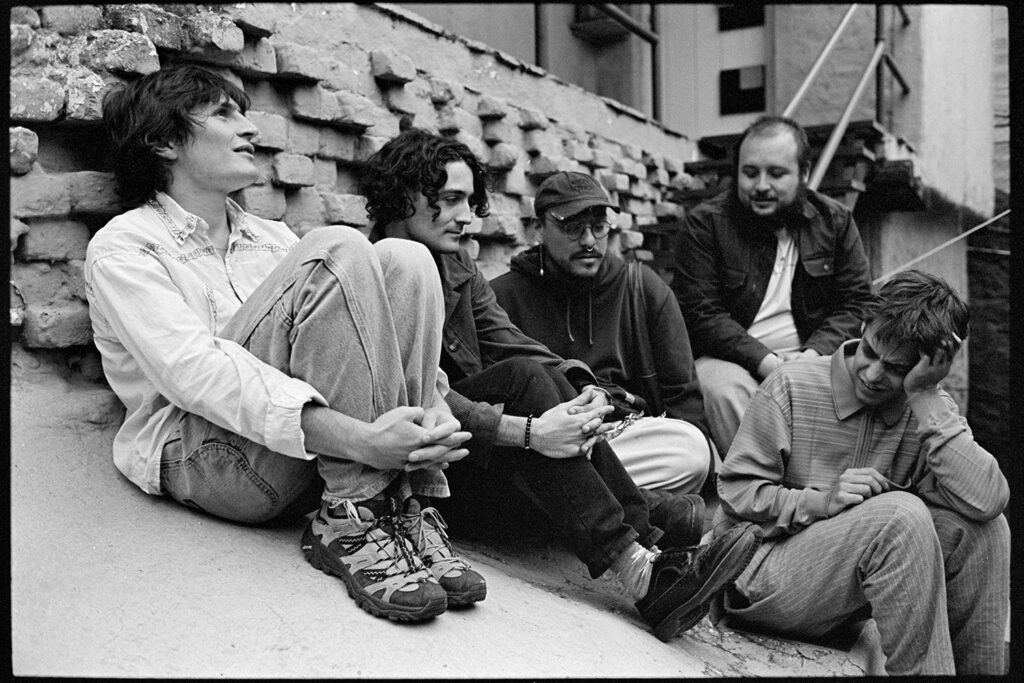
Some bands chase answers. Diles que no me maten seem more interested in the clues.
The Mexico City quintet has built a reputation on wandering (through songs, landscapes, poems, and ideas) with no interest in arriving too quickly. Across four albums, they’ve transformed improvisation into a philosophy, crafting sprawling, poetic compositions that feel equally indebted to krautrock repetition, folk storytelling, literary mysticism, and the accidental discoveries that happen when musicians trust instinct over certainty. Their latest album, Escrito en Agua(“Written in Water”), may be their most deliberate work to date, but it remains devoted to the same restless curiosity that has guided them from the beginning.
That spirit runs through every corner of the band’s world. One moment they’re discussing Mahmoud Darwish, whose poetry became a companion throughout the album’s creation. The next they’re reminiscing about buying records outside a Mexico City metro station, sleeping on venue chairs as children, or chasing hidden rivers and roadside adventures between tour stops. For Diles, music is a way of paying attention.
Fresh off a breakout stretch that included acclaimed performances at SXSW and ahead of an ambitious international tour, the band finds itself in a fascinating place: experiencing its biggest moment yet while remaining deeply committed to the small details that make life meaningful. During our conversation, we talked about writing songs inspired by The Waste Land, building an album in a makeshift gallery studio, finding beauty in creative limitations, why they’re proudest of “Perquisidor,” and how a band that now spends much of its life on highways has learned to turn travel itself into part of the art.
What emerged wasn’t a story about success so much as a story about searching. As singer Jonás Derbez tells us, the wanderer at the heart of “Perquisidor” isn’t looking for a destination. He’s looking for details. In many ways, Diles que no me maten are doing the same—following threads of wonder wherever they lead, one song at a time.
Intro/Warm-Up
It’s been a wild few years globally. Before we get into music—how are you doing these days, really? How have you been navigating everything, creatively and personally?
Well, as a band we’ve been lucky to keep going and traveling a lot. At the same time, we’ve become more careful and conscious about how we do it. Music isn’t politics, but we always remember what Woody Guthrie wrote on the front of his guitar: “This machine kills fascists.”
We are okay. We are living our best moment right now, and it’s also the hardest.
The music landscape feels like it’s constantly evolving—post-COVID touring challenges, the rise and fall of trends on social media, the short lifespan of singles, albums, and music in general… What has that shift felt like from your perspective? Has it impacted how you approach your music—or how you release it?
We see it, but we don’t care much. We love making music. We grew up believing that making a living from music we love was a lost dream, so everything after that feels like a gain.
Our music isn’t trendy, but if you come to a concert, it will catch you. It feels heavy and personal because we take it that way.
Origin Story
Let’s go back to the beginning—where did you grow up, and what role did music or creativity play in your early life?
I grew up in Xalapa, Veracruz. My father was a free jazz musician, and as a kid I spent many nights sleeping on venue chairs. Music took over my life. The whole band comes from families of music lovers.
What music filled your world growing up? Do you remember the first concert you attended or the first time you felt completely inspired by a song?
I used to have a Discman with a B.B. King record. I loved “Jump with You Baby.”
As you started discovering music on your own, where did you go digging? Were you a record store regular, a music blog browser, or someone trading playlists or mix CDs with friends? Who were some of the early artists that really stuck with you?
When I started earning my own money, I started to buy records from a guy selling outside the San Pedro de los Pinos metro station. He was Cuban, and he recommended I buy a Bola de Nieve record. Balajú has stayed with me to this day.
What was your path into music like? Did you have any formal training, or was it more of a self-taught, experimental process?
There are different stories from each one of the guys. For me, music was always there, but what I really wanted was to be a poet. I was 23 when I started writing songs, then I became addicted to doing so. It’s much more fun being a musician.
Did you have any day jobs along the way that influenced your art or your outlook? Any favorites?
I used to work on farms and in cinemas. From one I got inspiration, and from the other I learned how to be organized.
Creative Union / Current Project
Is this your first music project, or have you been making music in other forms before this? Did this project come together organically, or were you actively looking to build something new?
This is my first project, and it feels like my life project so far. It came into my life and gave it purpose. It’s still teaching me about life. I would love to have more projects, but not right now—my heart can’t take it. Maybe when I’m older.
Let’s talk about your latest release. What sparked it, and what did the creative process look like—from songwriting to recording?
We all had different ideas: some demos, some emotions we wanted to approach through songs, and some personal challenges, like adding a string quartet to a track.
Was there a specific moment, event, or period where a lot of the lyrics or emotions behind the project poured out?
There was a calm afternoon. I was in my flat with my partner while she was drawing, and I was reading The Waste Land. When I finished the book, I picked up the guitar and wrote two songs in an hour. Both made it onto the album: “Jardín” and “Viene el Viento.”
Did you have pieces of this project (melodies, lyrics, ideas) sitting with you for a while before recording? If so, how did your relationship with those ideas change over time?
I recorded the album while reading A Border of Butterflies by Mahmoud Darwish. His poetry was a great companion. We dedicated the album to him.
Has your creative process shifted since earlier releases—or even since you first started making music? Has it become more intentional or more intuitive over time?
I think it’s becoming more balanced between intuitive improvisation and composition. It used to be only raw feeling—discovering the song while we recorded it. Now we cook each song more carefully and take more time with them.
Do you write best in bursts, or are you someone who chips away slowly and steadily? What helps you get into the right headspace creatively?
I’m always writing lyrics in my head, and Andrés is writing music even on airplanes.
But the real bursts come when we’re together in the rehearsal room, or even now during slow soundchecks.
Place & Space
Does travel or place influence your work? Do your surroundings shape your sound, or is it more internal for you?
Travel definitely changes us. Right now, northern Mexico and the southern U.S.—their nature and culture—are really important for us. We spend so much time on the road that I think we make highway music now.
Where did you record this project, and what was the vibe like? Did the environment (a basement, a studio, somewhere else) impact the energy or intimacy of the songs?
We recorded in a self-made studio in Santa María la Ribera, Mexico City, inside an empty gallery space. It was marvelous. We had ten days, and we used them from 10 a.m. to midnight every day.
Sebastián Rojas, a longtime friend, produced it, and almost every day a different friend stopped by the studio so we could play them the songs. It was a beautiful moment.
Were there any limitations—technical, emotional, or logistical—that shaped how this record came together? What track are you most proud of, and why?
There are always limitations, but we embrace them as part of the craft. Those limitations become the style—the plastic decisions we don’t make consciously but that end up defining the music.
“Perquisidor” is the song we’re most proud of right now.
When did the album title click into place for you? What does it mean in the larger story of this record?
The album title came at the very last minute, but it made immediate sense.
It means “writing in water.”
What part of the process—writing, arranging, recording, releasing—brings you the most joy?
Building the song together, finding the structure, understanding the mood of each song.
Visuals & Aesthetics
Let’s talk about the visual world around your music—how hands-on are you when it comes to artwork, press photos, videos, etc.? Do you see visuals as an extension of the music, or something separate?
It’s part of the music, everyone that colaborate with us its part of the familia we are building. and deeply understand the art we are doing. The great example of this is Ardo. He made the new album cover, 2 different t shirts, a cassette bootleg cover, all the posters, stickers and the mural of the album cover. Working with him felt like our world collide perfectly. We share some of the same intrigues and entusiasmo.
With social media being so omnipresent, do you feel pressure to “present” your work a certain way—or does it give you more freedom?
Sometimes its pressure but only when I have spend more time looking at the phone than through the window.
We have really good people following us, we crash sofas and book shows just by posting and blind trusting people. So, in that, it has made us more free.
Performance & Life
What’s your rehearsal or creative space like? Any weird rituals, memorable moments, or mishaps worth sharing?
We do many things together as a band. We’re always looking for side quests while touring—maybe finding a hidden marketplace, picking up strange objects, or taking a quick swim in a nearby river. We like treating touring as real traveling, not just moving from venue to venue.
How do you mentally prepare for a show—and how do you wind down after?
I like waking up early and not spending too much energy during the day, but I don’t really have a specific ritual.
After the show, we’re usually rushing to the next city, so the wind-down happens while joking around in the car.
Touring can be chaotic—any personal hacks for eating cheap, eating healthy, or staying grounded on the road?
Touring is kind of like camping. Everyone has different essentials, but I’d say: travel light, pack well, and bring a cooler. Make as many homemade meals as you can.
Scene & Community
What’s the music scene like in your hometown or current base? What do you love about it—and what would you like to see grow or change?
The music scene in Mexico City is great. It’s a beautiful place to be a musician. There’s always something happening. I think my hope is to see the Mexico City scene become more connected with other amazing scenes around Mexico, like Durango or Sinaloa. It would be incredible to have easier ways to tour around the country.
Final Question:
What’s something you’ve learned—about music, about yourself, or about the world—that’s shaping what you want to create next?
Yesterday we were in Culiacán, Sinaloa, and Jerónimo (our guitarist) said: “Music is bigger than music.” Then he laughed because it made no sense—but somehow we all understood it.
I guess music will always teach you the lightness of life itself.